
Educational videos made with eduvids
A hand-selected set of visual explanations from the official eduvids channel. Every page identifies its source and links to the original video.
Visit the official channel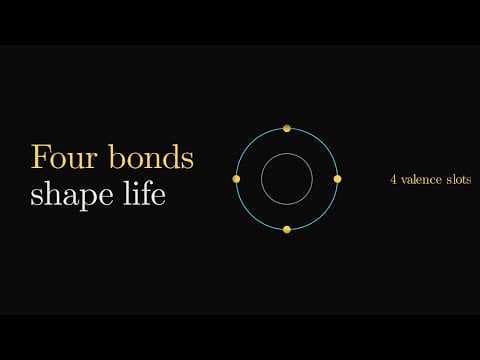 Video
Why Carbon Builds All of Organic Chemistry
See how carbon’s four valence electrons let it form stable chains, rings and double bonds, the backbone behind every molecule in organic chemistry.
 Video
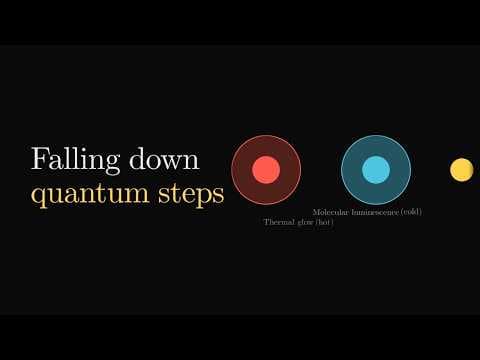
Why Chemical Bonds Glow Without Any Heat
Chemiluminescence explained visually: how a reaction leaves electrons in an excited state, and why they give that energy back as light instead of heat.
 Video
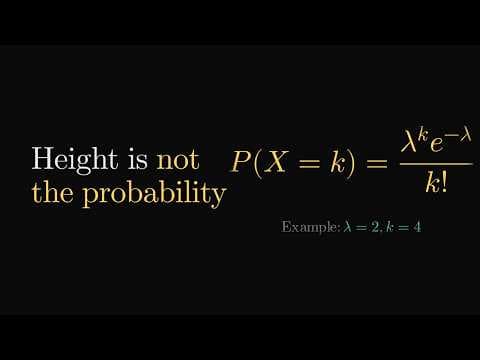
Why the Area Under a Curve Equals 1
Why every probability density curve encloses an area of exactly 1, and how area under the curve becomes probability for a continuous random variable.
 Video
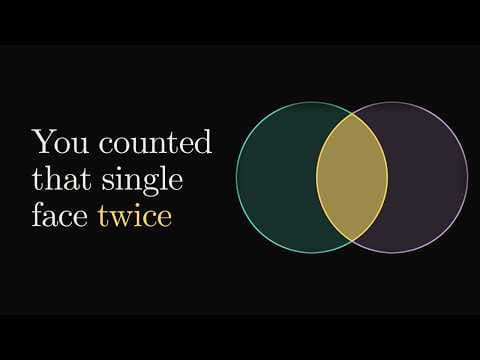
Why Overlapping Events Break Naive Addition
Why P(A or B) is not simply P(A) + P(B) when events overlap, and how the inclusion–exclusion principle removes the outcomes counted twice.
 Short
What Is an Integral? Calculus Explained Visually
See how Riemann sums turn infinitely thin slices into area, then connect that idea to antiderivatives through the fundamental theorem of calculus.
 Video
Navier–Stokes Equations From Scratch
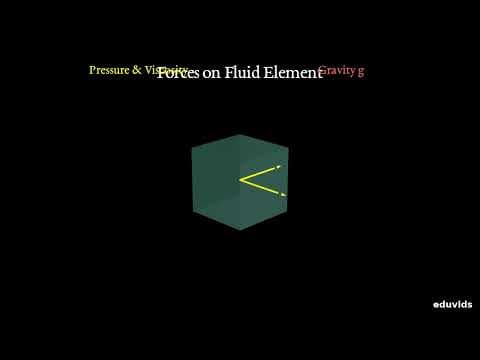
Build the Navier–Stokes equations from conservation laws and see how pressure, viscosity and acceleration describe the motion of a fluid.
 Video
The Geometry of Hyperbolic Space Explained
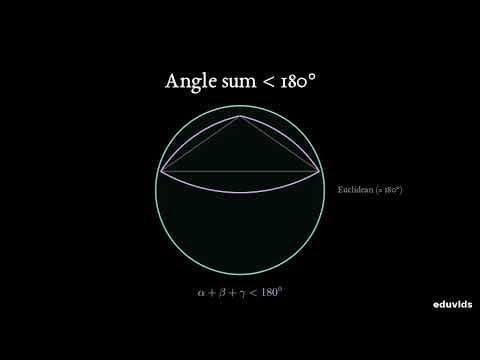
Enter the Poincaré disk and learn how negative curvature changes parallel lines, triangle angles, distance and tessellations.
 Video
Complex Integration Visualized From First Principles
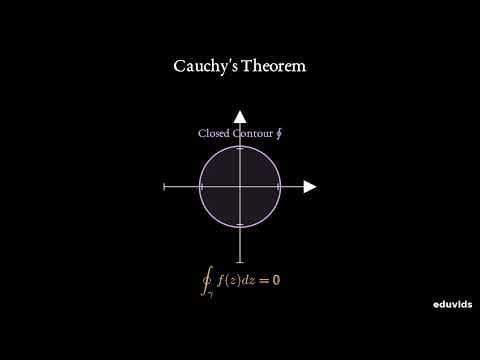
Extend integration into the complex plane using paths, parameterization, Cauchy’s theorem and the residue theorem.
 Short
The Chaos of a Double Pendulum Explained
Watch two nearly identical double pendulums rapidly diverge and discover why tiny differences make chaotic systems difficult to predict.
 Video
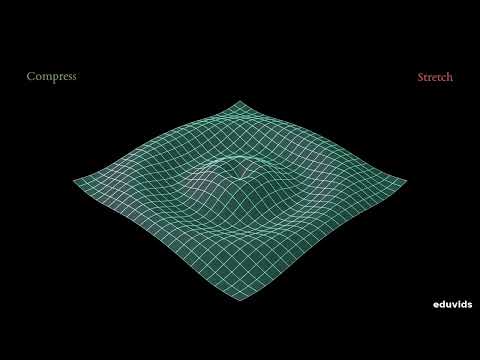
How Gravitational Waves Stretch Spacetime
Visualize ripples in spacetime, plus and cross polarizations, and the laser interferometers used to detect extraordinarily small changes in distance.
 Video
The Seven Math Problems Worth $1,000,000
Tour the Millennium Prize Problems and the open questions connecting prime numbers, computation, geometry, fluids and quantum physics.
 Video
The Pigeonhole Principle Explained With Socks
Use familiar examples to understand why placing more objects than containers guarantees that at least one container holds multiple objects.